Pressure Washing vs. Soft Washing
Two different tools for two different problems. Which one fits depends on the material, the buildup, and the condition of the surface, not a default setting on a machine.
Most exterior cleaning jobs on an Erie County property end up using both. The harder call is matching the method to the surface before any pressure goes near it.
The short version
One uses force. The other uses chemistry.
The right choice depends on the material, the condition of the surface, and what is sitting on it.
Method one
Pressure washing
Force, applied with care to surfaces that can take the hit.
- Built for
- Concrete, brick paving, patios, dumpster pads.
- Main risk
- Etching, water intrusion, or marked wood if force is too high.
Method two
Soft washing
Low pressure plus a cleaning solution that does the lifting.
- Built for
- Vinyl siding, soffits, trim, stucco and EIFS.
- Main risk
- Plant stress, streaking, or residue if mix and rinse are mishandled.
Side by side
Pressure for hard surfaces. Soft wash for delicate ones.
| Method | Best for | Avoid using on | Main risk | Typical result |
|---|---|---|---|---|
| Pressure washing | Concrete driveways and walks, brick paving, garage floors, dumpster pads, pool decks | Vinyl or aluminum siding, painted trim, soffits, soft or weathered wood | Etching concrete, eroding mortar, forcing water behind siding, marking wood | Grit, road salt, and surface staining lifted by mechanical action |
| Soft washing | Vinyl and aluminum siding, painted surfaces, soffits and fascia, stucco and EIFS | Heavy oil staining on concrete, mud caked into pavers, ground-in tire marks | Wrong solution strength or dwell time, plant injury without a thorough rinse | Algae, mildew, and pollen lifted with the surface itself left intact |
Method one
Where pressure washing fits.
Hard, dense surfaces that take a hit and need force to lift what is sitting on them.
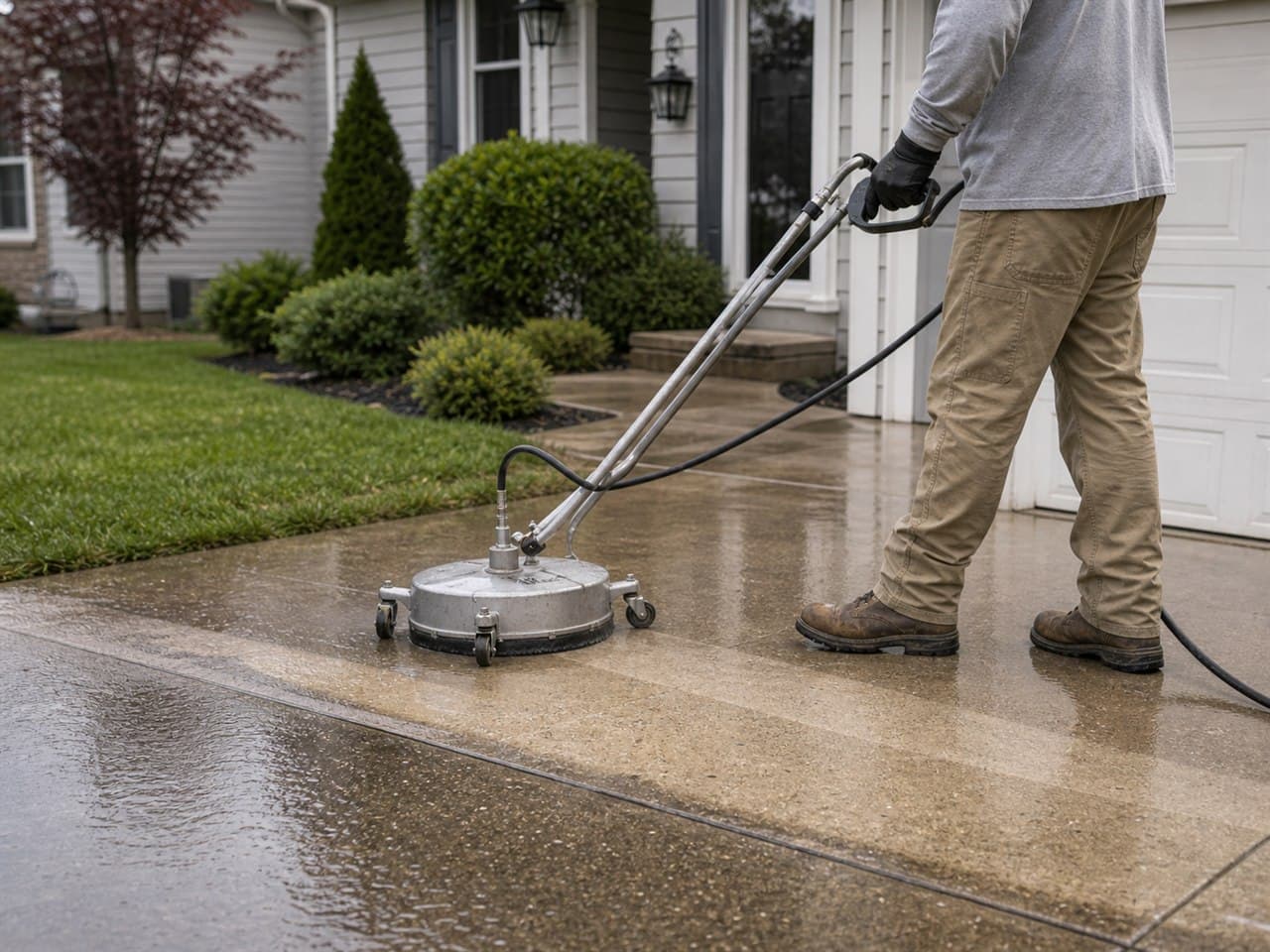
Concrete driveways, sidewalks, patios, brick paving, dumpster pads, and most masonry hardscape respond to mechanical pressure in a way siding never will. The force is what lifts ingrained grit, road salt, and the staining left behind after a winter of plow runs and tire drip.
Equipment matters as much as the operator. A surface cleaner (the flat spinning disc with two jets underneath) spreads the spray evenly across the slab. A bare wand at the same pressure can leave stripes if it is rushed. On older or decorative concrete, the first pass gets dialed lower so the surface itself does not pit.
The risks are well known and avoidable. Force can etch soft concrete, erode aging mortar, drive water behind siding laps, raise wood grain, and dull paint that looked fine an hour earlier. The wrong tip pointed at the wrong surface is what produces the horror-story photos that get passed around online.
See the pressure washing service page for the surfaces handled and how the work is priced.
Method two
Where soft washing fits.
Materials that bruise, oxidize, or seal poorly under force, and any surface where organic growth is the real problem.
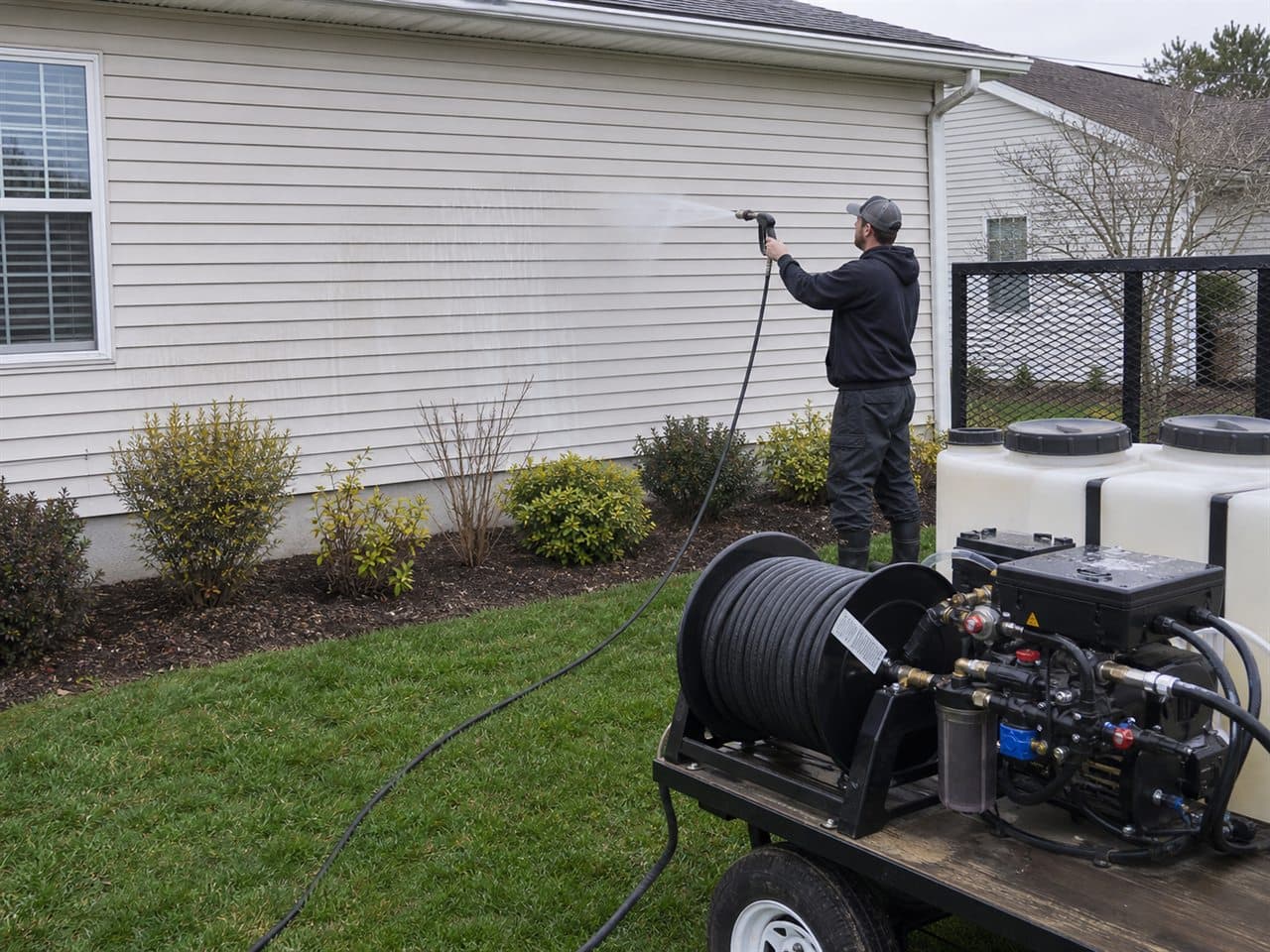
Vinyl and aluminum siding, painted surfaces, trim, soffits, stucco, and EIFS are all soft-wash work. The pressure used is usually what a garden hose delivers, sometimes lower. The cleaning solution is what does the lifting.
A surfactant-based mix is applied from the bottom up, given time to dwell on the surface, and then rinsed top-down with fresh water. Dwell time is the variable that matters most. Too short and the growth is still there; too long and surfactant residue can streak. The choice of solution depends on what is being lifted. Algae and mildew need different chemistry than pollen film or oxidation.
Plant protection is part of the job, not an afterthought. Beds get pre-rinsed so foliage is already wet before any runoff reaches it, and the thorough rinse at the end pulls residue off plant material and into the soil where it can dilute. The work goes wrong if solution strength, dwell time, or rinsing gets shortcut, not because the chemistry is dangerous on its own.
See the soft washing service page for the surfaces handled and how the work is scoped.
Surface by surface
What we use, and why.
A short cheat sheet for the surfaces that come up most on Erie County properties.
Vinyl siding
Soft wash
High pressure cracks older vinyl and can force water behind lap joints. A surfactant-based wash with a slow, top-down rinse does the work without the risk.
Concrete driveway
Pressure wash
A surface cleaner (the flat spinning disc) spreads the spray and avoids the striping a bare wand can leave. Older slabs get a lower first pass to keep the surface from pitting.
Brick walls
Soft wash
Mortar joints and the brick face both take damage from force, especially on older buildings. Soft washing keeps the joints intact and lifts the organic growth that is usually the real problem.
Wood deck or fence
Mixed, soft first
A cleaning solution lifts gray and mildew before any pressure is used. If pressure is added at all, it stays low and keeps moving so the grain does not raise and the boards do not bruise.
Painted trim
Soft wash
High pressure peels marginal paint even if it looked sound from the ground. The fix afterward is more expensive than the wash itself.
Gutters and fascia
Soft wash exteriors; hand-clear inside
Inside debris is removed by hand and bagged. The outside face of the gutter and the fascia behind it are soft washed so they actually look clean from the curb.
Storefront exterior and glass
Soft wash with glass detail
Frames, kick plates, and signage take damage from high pressure. Glass is wiped or low-pressure cleaned. Sidewalks and pads alongside are pressure washed on the same visit.
Older or weathered surfaces
Soft wash by default
If anything is loose, chalky, or already worn, start low. Pressure can be added if the surface holds up. Going the other way around is harder to undo.
Why Erie is its own thing
Lake, salt, shade, and seasons.
A handful of local factors change the answer to which method fits, and how often the work needs to come back.
Lake Erie moisture
Damp air keeps north-facing walls and shaded surfaces wet longer, which favors algae and mildew growth across the year.
Freeze and thaw cycles
Every joint, sealant line, and hairline crack moves through winter. High pressure can finish what the weather started. Soft washing on aging surfaces avoids that path.
Road salt and winter residue
Lower siding, sidewalks near the curb, and commercial pads near plowed streets hold a salt film that wants both pressure and a cleaning solution to lift.
Pollen and organic buildup
Spring coats glass, siding, and gutters in a yellow film that stays until something washes it off. A soft wash carries the pollen and the algae underneath it.
Shaded lots
Heavy tree cover and low-light side yards hold growth on siding longer than sun-facing walls. These properties usually run on a tighter cadence.
Leaves and gutter debris
Wet leaves pack fast. The same buildup ends up streaked down the siding once it composts in the gutter. Clearing first, then washing, is the order that holds.
Commercial frontage near roads
Storefront glass and concrete near busy streets pick up grit and oily film that needs both methods together on the same visit.
Around the county
What we tend to see, by area.
General property conditions, not a promise about any one address. The right method on your property is decided on site.
Erie, PA
Bayfront blocks and older neighborhoods often have aging mortar, painted siding, and weathered wood. Soft washing fits most of the exterior; pressure handles sidewalks and pads.
Millcreek, PA
A mix of newer vinyl-sided homes and concrete driveways near the road. Soft wash for the house; pressure for the drive and the front walk.
Fairview, PA
Larger lots and tree cover keep shaded walls damp and algae-prone. Soft washing tends to carry most of the visit.
Harborcreek, PA
Lake-influenced wind and moisture keep growth on north-facing walls ahead of schedule. A regular soft wash cadence usually fits the property.
North East, PA
Vineyard country, hardwood cover, and gravel roads leave dust and organic film. Soft wash the siding; pressure wash the hard surfaces.
Edinboro, PA
Wooded properties and rental homes near campus often need both methods, with neglected concrete and aging trim on the same visit.
How we approach the call
Method picked by surface.
Pressure or soft wash gets chosen for what is in front of us, not for what is easier to bill.
- 1
Walk the surface first
Before anything is hooked up, the material, the condition, and any failing seals, caulk, or paint get a look.
- 2
Match the tool to the surface
Pressure level, nozzle, surface cleaner or wand, and the cleaning solution are picked for what we are washing, not the other way around.
- 3
Protect what is around it
Beds get pre-rinsed, plants are tarped where they need to be, and adjacent surfaces are covered if runoff is a concern.
- 4
Rinse thoroughly
Top down with fresh water until the surface and the beds below it run clear.
- 5
Recommend method by surface
Pressure or soft wash gets recommended for the material in front of us, not for whichever line item is easier to sell.
Signs to be careful
Where high pressure is the wrong call.
If any of these are on your property, the safe default is soft washing. Pressure can be added later if the surface holds up; the reverse is harder to fix.
- Loose or chalky paint
- Oxidized vinyl or aluminum siding
- Aging mortar or sandy joints
- Soft, weathered wood
- Failing caulk or sealant at trim and windows
- Water intrusion concerns near windows, doors, or below grade
- Delicate or decorative trim
Related: gutter cleaning, window cleaning, and commercial exterior service.
Common questions
Pressure or soft wash, answered.
A few of the questions homeowners and business owners ask before booking.
Is soft washing better than pressure washing?
Neither is better in the abstract. Soft washing fits surfaces that bruise, oxidize, or seal poorly under force, like vinyl siding, painted trim, and soffits. Pressure washing fits surfaces that need mechanical action to lift grit, salt, and staining, like concrete and brick paving. Most exterior cleaning jobs use both.
Can pressure washing damage siding?
Yes. High pressure can drive water behind lap joints, crack older vinyl, dull paint, and accelerate oxidation on aluminum. Most siding should be washed with low-pressure equipment and a cleaning solution instead of force.
Is soft washing safe for plants?
It can be, if the solution is mixed for the surface, beds are pre-rinsed so the foliage is already wet, and a thorough rinse follows the work. The risk is concentration and dwell time rather than the chemistry itself.
Which method is best for concrete?
Pressure washing, usually with a surface cleaner that distributes the spray rather than a bare wand that can leave stripes. Older concrete and decorative finishes need a lower first pass to keep the surface from pitting.
How often should exterior surfaces be cleaned in Erie County?
House washes usually hold two to four years depending on tree cover and exposure. Concrete driveways near the road or plowed streets often get an annual or biennial cleaning. More frequent cleaning may make sense for high-traffic storefronts, with the cadence set during a walkthrough.
Can storefronts use both methods?
Most do. Storefront glass and entries are wiped or low-pressure cleaned. Sidewalks, dumpster pads, and drive-thrus get pressure washed. The two are scheduled together so the visit covers the whole frontage.
What should I do before a cleaning appointment?
Move grills, planters, and patio furniture clear of the work area, close windows, and mention any loose siding, failing caulk, or older paint so we can adjust pressure and dwell time before we start.
Pressure washing & soft washing
Not sure which fits your property?
Send a few details. We will follow up with the method we would use, why we would use it, and what the work would cost at your address. Erie, Millcreek, Fairview, Harborcreek, North East, and Edinboro covered most often.